Deep Learning
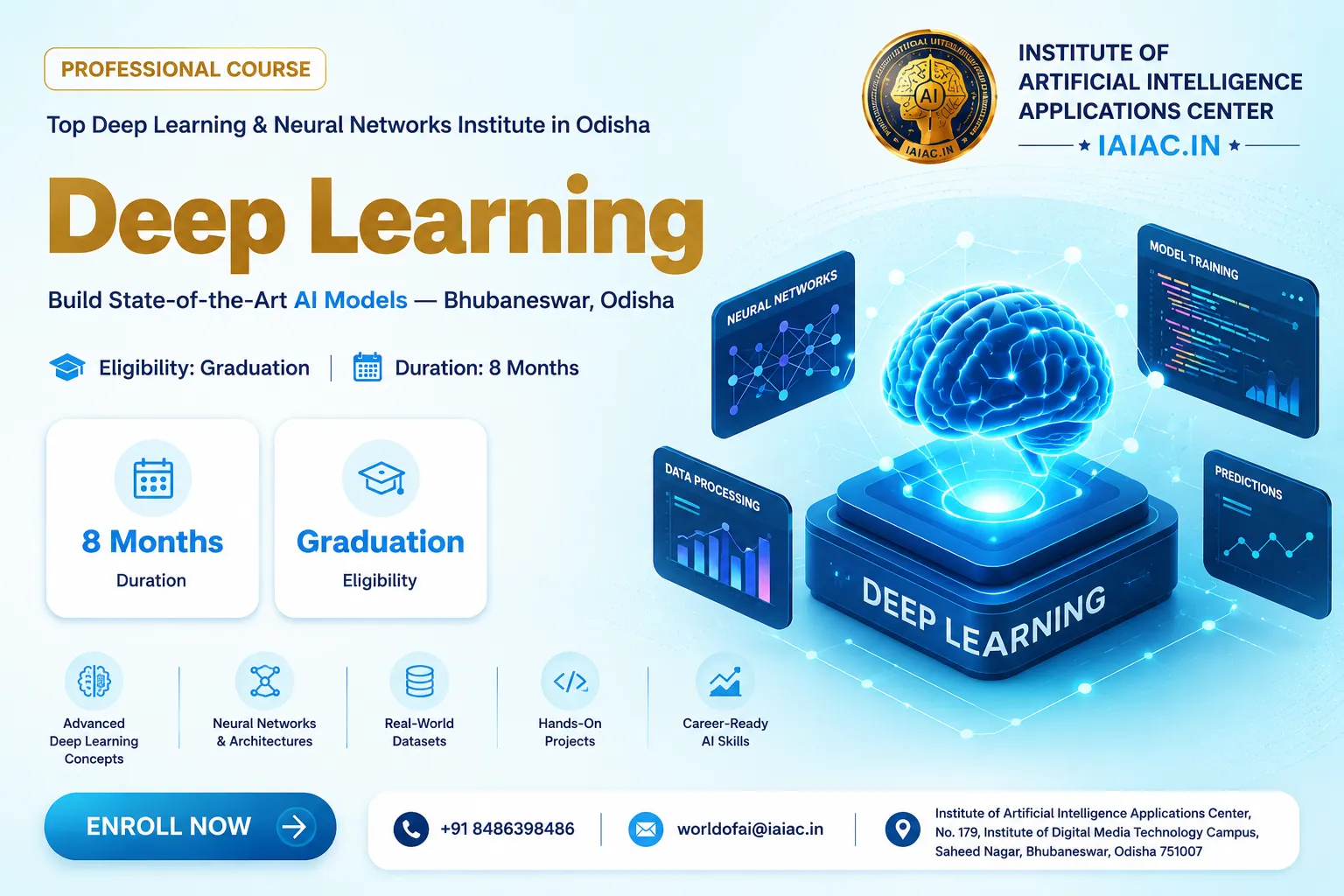
Build neural networks, CNNs, transformers, generative AI systems, and advanced machine learning models.
Level: intermediate Duration: 6 Months
Curriculum
Module 1: Neural Network Fundamentals
Tools: TensorFlow, PyTorch
- Perceptrons and activation functions
- Forward and backward propagation
- Gradient descent and optimizers
- Loss function fundamentals
- Backpropagation mathematics
- ReLU, Sigmoid and Softmax functions
Module 2: Deep Feedforward Networks
Tools: TensorBoard, Weights & Biases
- Multilayer perceptron architectures
- Regularization techniques
- Batch normalization systems
- Dropout implementation
- Weight initialization strategies
- Hyperparameter tuning workflows
Module 3: Convolutional Neural Networks
Tools: Keras, OpenCV
- Convolution and pooling operations
- LeNet, AlexNet and VGG architectures
- ResNet and skip connections
- Transfer learning workflows
- Data augmentation techniques
- Fine-tuning pretrained models
Module 4: Recurrent Neural Networks
Tools: TensorFlow, PyTorch
- RNN fundamentals and vanishing gradients
- LSTM and GRU architectures
- Bidirectional recurrent networks
- Sequence-to-sequence systems
- Attention mechanisms
- Time series forecasting
Module 5: Generative Models
Tools: Stable Diffusion, GANs
- Autoencoders and variational autoencoders
- Generative adversarial networks
- DCGAN and conditional GAN models
- StyleGAN architectures
- Diffusion model workflows
- Synthetic data generation
Module 6: Advanced Architectures
Tools: Transformers, ViT
- Transformer architecture fundamentals
- Self-attention and multi-head attention
- BERT and GPT models
- Vision transformer systems
- Multimodal deep learning
- Neural architecture search
Module 7: Optimization & Scaling
Tools: Horovod, Mixed Precision
- Advanced optimizer strategies
- Learning rate scheduling
- Mixed precision training
- Distributed training systems
- Model parallelism workflows
- Memory optimization techniques
Module 8: Production Deployment
Tools: ONNX, TensorFlow Serving
- Model quantization and pruning
- ONNX conversion workflows
- TensorFlow Serving deployment
- TorchServe production systems
- Edge deployment for mobile and IoT
- Model monitoring and drift detection
Career Outcomes
- Deep Learning Engineer — ₹10,50,000: Design and train complex neural networks.
- Research Scientist (AI) — ₹14,00,000: Publish novel architectures in top conferences.
- Computer Vision Engineer — ₹9,80,000: Build image recognition and detection systems.
- NLP Research Engineer — ₹11,00,000: Work on language models and transformers.
- AI Architect — ₹15,00,000: Design end-to-end AI solution architectures.
- ML Infrastructure Engineer — ₹12,50,000: Build scalable training and inference platforms.
- Autonomous Systems Engineer — ₹13,00,000: Develop AI for self-driving cars and drones.
- Generative AI Specialist — ₹16,00,000: Create tools using GANs and Diffusion models.
- AI Product Lead — ₹18,00,000: Manage AI product development lifecycle.
- Principal AI Scientist — ₹22,00,000+: Lead strategic AI research initiatives.
Frequently Asked Questions
What is the Deep Learning course?
The Deep Learning course is an advanced Artificial Intelligence program focused on neural networks, deep neural architectures, AI model training, image recognition, natural language processing, predictive systems, and intelligent automation using modern Deep Learning technologies and frameworks.
Who should join the Deep Learning course?
This course is ideal for students, AI enthusiasts, software developers, Machine Learning learners, data professionals, researchers, engineers, and working professionals who want to build advanced skills in Artificial Intelligence and neural network technologies.
Do I need coding knowledge for the Deep Learning course?
Yes. Basic programming knowledge, especially in Python, is helpful for understanding Deep Learning workflows and AI model development. Learners with familiarity in Machine Learning concepts and data analysis will benefit the most from this course.
What skills will I learn in the Deep Learning course?
Students will learn neural networks, deep neural architectures, AI model training, image classification, predictive analytics, natural language processing concepts, automation systems, data preprocessing, intelligent decision-making systems, and practical Deep Learning workflows.
Which technologies and tools are covered in this course?
Students will gain hands-on exposure to modern Deep Learning frameworks, AI development tools, neural network libraries, data processing workflows, and real-world Artificial Intelligence implementation techniques used in industry applications.
How is Deep Learning used in real-world industries?
Deep Learning is widely used in industries such as healthcare, robotics, finance, cybersecurity, autonomous vehicles, e-commerce, media technology, smart automation, and natural language processing for intelligent prediction, automation, and data-driven decision-making.
Will I work on practical Deep Learning projects?
Yes. Students will work on hands-on projects involving neural network development, image recognition systems, predictive AI models, automation workflows, intelligent applications, and portfolio-building assignments designed to develop industry-ready skills.
What career opportunities are available after completing this course?
After completing this course, students can pursue career opportunities such as Deep Learning Engineer, AI Engineer, Machine Learning Engineer, Data Scientist, AI Research Associate, Neural Network Developer, Automation Engineer, and Artificial Intelligence Specialist.
Do you provide certification after course completion?
Yes. Students receive an industry-recognized certification after successfully completing the Deep Learning course, practical projects, and assessment-based learning activities.
Why should I learn Deep Learning today?
Deep Learning is one of the fastest-growing areas in Artificial Intelligence and powers many modern AI systems such as image recognition, chatbots, recommendation systems, automation tools, and intelligent applications. Learning Deep Learning helps students access high-demand AI career opportunities and build future-ready technical skills.
ସ୍ପଷ୍ଟୀକରଣ: ଏହି ବିଷୟବସ୍ତୁଟି ସୂଚନାମୂଳକ ଉଦ୍ଦେଶ୍ୟରେ IAIAC : Institute of Artificial Intelligence and Applications Center ରୁ ସ୍ୱୟଂଚାଳିତ ଭାବରେ ସଂଗ୍ରହ କରାଯାଇଛି। ମୂଳ ଲେଖାଟି ପଢ଼ିବା ପାଇଁ, ଦୟାକରି ଏଠାରେ ଦେଖନ୍ତୁ।

Odisha Press & Media
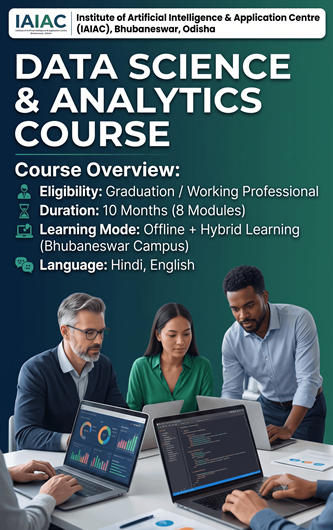
Learn Data Science & Analytics at IAIAC.IN
Learn in-demand data skills with hands-on projects and mentor support.





/sambad/media/media_files/2026/09/17/hfshsfhxvvxv-2026-09-17-02-21-40.jpg)
/sambad/media/media_files/2026/08/21/sfhsffsfhfhs-2026-08-21-02-22-21.jpg)
/sambad/media/media_files/2026/08/10/adgdagadggd-2026-08-10-01-17-24.jpg)

/sambad/media/media_files/2026/08/10/elephant-2026-08-10-01-13-06.jpg)