‘We don't want customers to build 1,000 AI agents, we want them to build agentic workflows that work’: Pega Systems CPO
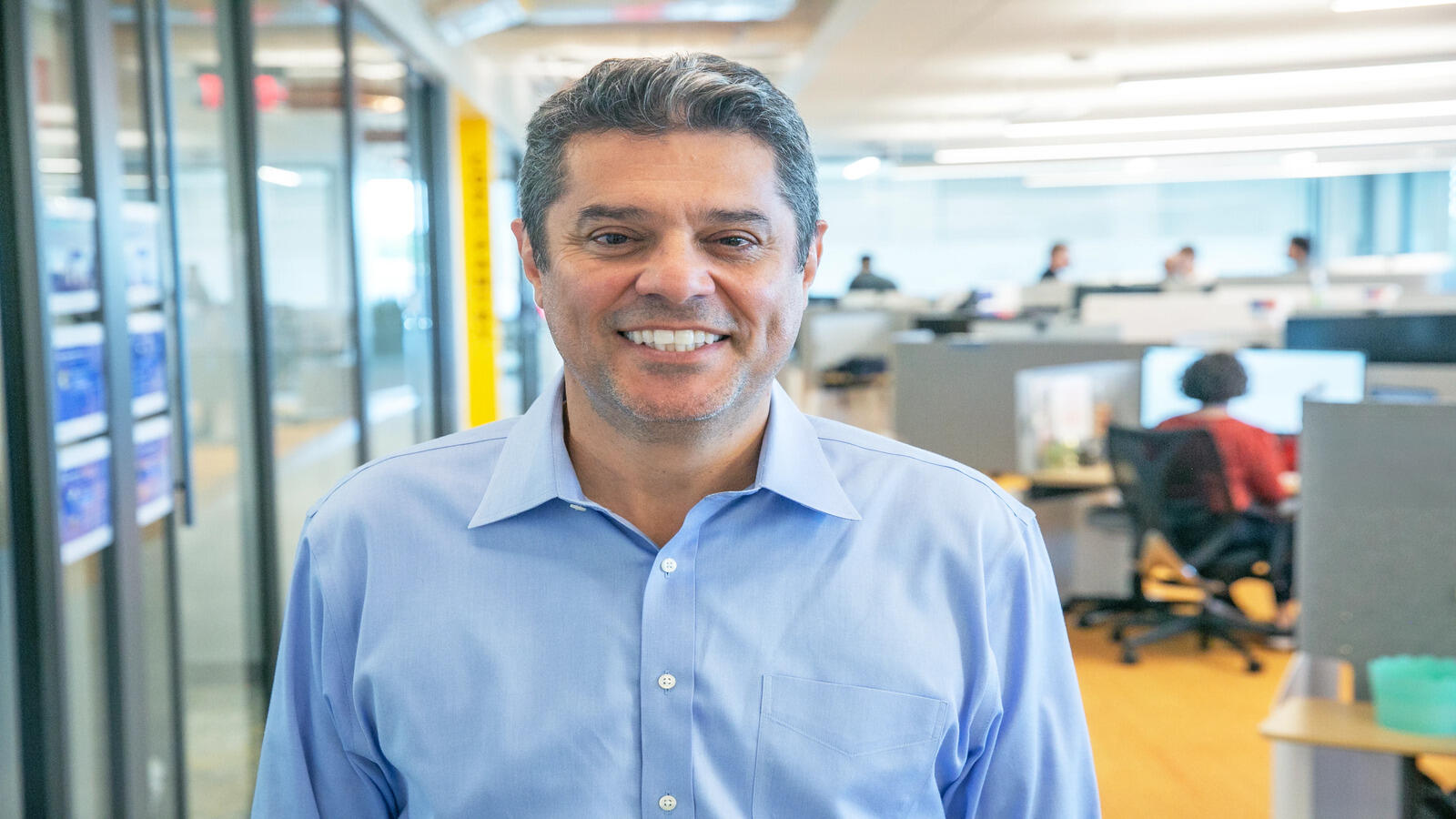
Pegasystems Chief Product Officer Kerim AkgonulPegasystems CEO Alan Trefler grabbed headlines when he told HFS Research CEO Phil Fersht that he considered software companies’ approach of deploying thousands, or even 10,000, agents as“madness.”Trefler’s comment came at a time when enterprise customers as well as enterprise software companies are advocating the widespread adoption of AI agents, with many organisations exploring ways to deploy multiple agents across business functions to automate workflows and execute tasks autonomously.During his recent visit to Bengaluru, ETEnterpriseAI asked Pegasystems Chief Product Officer Kerim Akgonul whether Pegasystems advocates deploying fewer, more specialised agents, or does it see a future where thousands of agents work together to power enterprise operations?“Look, enterprises are going to build agents irrespective of what we tell them.
The outcome is less about whether they build an AI agent or how many AI agents they build.
Who cares?
The outcome is basically delivering the business results and whether they're getting to faster resolution, right?
Are they making better decisions and can they get there with lower effort, with higher accuracy?” he said.Pegasystems, founded in 1983, specialises in business process management, decision automation and customer engagement, serving large enterprises and government agencies across financial services, insurance, healthcare, telecommunications and manufacturing.Its customers include global enterprises such as JPMorgan Chase, HSBC, American Express, Citi, Standard Chartered, Commonwealth Bank of Australia, Siemens, Vodafone, Verizon, Unilever, Coca-Cola, Ford and HCA Healthcare.“Where we bring consistent value to customers is in building, changing and operating the mission-critical solutions they run their businesses on.
We want to leverage their agents, integrate with them and be part of agentic architectures, while retaining our core focus on predictable outcomes and orchestrating work to deliver business value,” he said.Building agentic workflowsInstead of building AI Agents, Pega wants its enterprise customers to build agentic workflows.
Using its Blueprint platform, enterprises can design workflows that define the data, validations, business rules and actions required.“We don't want customers to build agents with our products.
What we want them to do is build agentic workflows that drive predictable outcomes.
Whether processing a payment, handling a dispute, responding to a claim or onboarding a customer, they want the work done accurately, consistently and in compliance with corporate policies, laws and regulations, every time,” Akgonul said.The biggest difference is that the workflow sits over the automation.
Now, the automation can be from AI Agents, statistical AI, LLMs, or even robotic process automation (RPA).Over the years, Pega’s technology stack has evolved from a business rules engine focused on automated decision-making into a comprehensive enterprise platform spanning workflow automation, business process management, CRM and AI-driven decisioning, with machine learning, generative AI and agentic capabilities added along the way.Today, the company is bringing these capabilities together, leveraging decades of enterprise technology development to help customers automate complex processes, improve decision-making and deliver predictable business outcomes.“Think of it as a bento box of automation capabilities.
Businesses can combine AI agents, decision models, statistical models, business rules, integrations and human intervention depending on the workflow.
At its core, Pega remains a work automation platform, built on a centre-out architecture that ensures processes remain consistent across every customer touchpoint and channel,” he said.He states that a large bank dealing with complaints across 200 different categories used Pega’s agentic workflows to automate the process.
Previously, it relied on thousands of employees to handle the high volume of cases, yet struggled to meet regulatory deadlines and incurred government penalties.
By combining AI agents, deterministic automation and human intervention, the bank cut average resolution time from 40 days to just two.“Every workflow customers build and deploy with Pega now becomes available as an MCP endpoint, allowing it to participate in enterprise-wide agentic orchestration.
Whether invoked by employees, conversational interfaces or other agents, it runs on a central definition with enterprise-grade governance, security and compliance.Frontier model use cases for enterprises If we look at Pegasystems’ technology stack, frontier model capabilities are just one part of it.
Frontier models remain selectively deployed across enterprises, rather than embedded in mission-critical operations.
Their limitations around accuracy, cost, data security and governance make unrestricted deployment difficult.When asked how much need enterprises have for frontier models like GPT-6 or Claude Fable or Mythos, Akgonul said, “I think it’s coming, and in the next year we’ll definitely see their use.
But it has to be tightly scoped and contextual, rather than open-ended.
With a clearly defined context, you can get results very fast.”While frontier models come with strong reasoning capabilities, using them extensively also increases cost for enterprises.
However, Akgonul believes frontier models, which power AI Agents, are going to replace an increasing number of traditional automation components.“They will change how enterprises develop automation definitions and reduce the need for certain statistical AI models.
I believe we will see an evolution across every aspect of enterprise work automation, including how organisations build and deploy agents.
Every company is now developing a set of agents designed to perform specific functions and defining how these agents will be used within their organisations,” he added.Competition in the AI era Pega operates in a highly competitive enterprise software market, where it faces competition from companies such as Salesforce, ServiceNow, Microsoft, IBM and SAP, among others.Today, most enterprise software developers are building products and solutions to help enterprises develop AI agents.
Enterprise software boundaries are also increasingly blurring, with different vendors entering each other's space.
For instance, Salesforce expanded into workflow automation while ServiceNow moved deeper into CRM and customer service.
Pega too competes with both these software giants in the CRM and workflow automation space.For enterprise customers, this means greater choice but also increased complexity, as overlapping platforms could lead to fragmented systems, integration challenges, duplicated capabilities and rising technology costs.
Could this eventually lead to platform consolidation, reducing the number of enterprise applications companies use?
Akgonul, however, does not think so.“I don't see the number of enterprise applications coming down.
If anything, things are going to get more complicated.
As companies such as Salesforce and ServiceNow enter each other's markets, and AI players like OpenAI and Anthropic partner with multiple software vendors, enterprises could end up with several overlapping solutions.
Different departments may make different technology choices, making integration, data duplication, security and technical debt bigger challenges,” Akgonul said.Pegasystems in India Pegasystems is looking to deepen its engagement with India through its existing global enterprise customers, their Global Capability Centres (GCCs) and a growing developer ecosystem.The company, which has historically focused on large banking and financial institutions in the US and Europe, has built relationships with global customers operating GCCs and R&D centres in India.While India’s growing economy presents opportunities, Pega is not selling its products directly to Indian enterprises.“You can't sell in India the same way that you would sell in some other part of the world.
You have to have the right processes to address a particular geographical requirement,” Akgonul added.India is also central to Pega’s global talent and partner ecosystem.
More than 50 per cent of Pega developers worldwide are based in the country.
ସ୍ପଷ୍ଟୀକରଣ: ଏହି ବିଷୟବସ୍ତୁଟି ସୂଚନାମୂଳକ ଉଦ୍ଦେଶ୍ୟରେ News ରୁ ସ୍ୱୟଂଚାଳିତ ଭାବରେ ସଂଗ୍ରହ କରାଯାଇଛି। ମୂଳ ଲେଖାଟି ପଢ଼ିବା ପାଇଁ, ଦୟାକରି ଏଠାରେ ଦେଖନ୍ତୁ।

Odisha Press & Media
Learn Data Science & Analytics at IAIAC.IN
Learn in-demand data skills with hands-on projects and mentor support.