With Ontology, Snowflake wants enterprise AI agents to understand business context before they act
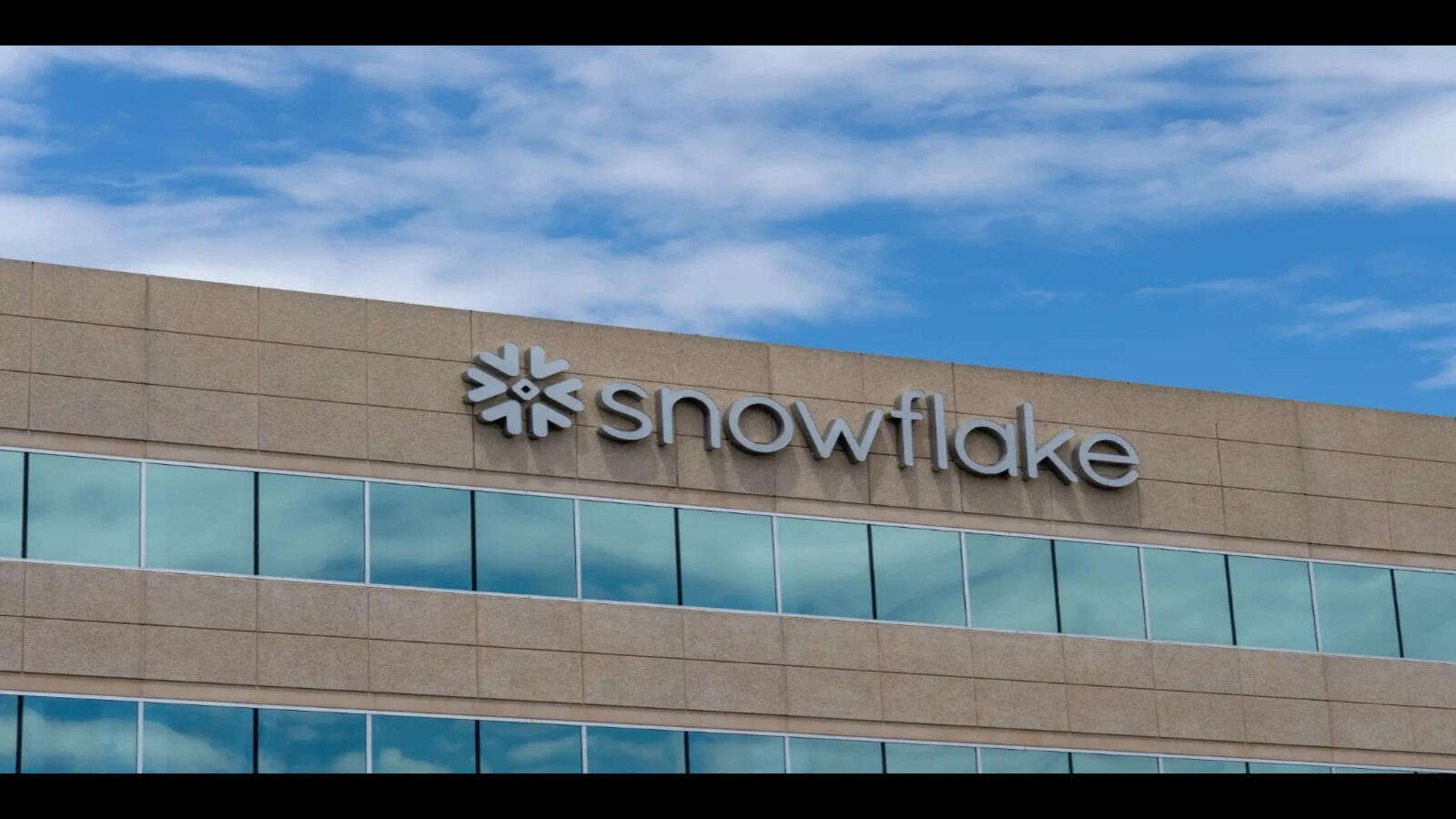
Snowflake believes its latest capabilities could help enterprises avoid rebuilding workflows as agent adoption expands.Building an AI agent is no longer the biggest challenge for enterprises.
The real test is deploying hundreds of them across business functions and ensuring they work reliably without compromising security or producing conflicting answers.Snowflake wants to help its enterprise customers overcome this challenge by bringing business context, governance and autonomous execution closer together within its AI Data Cloud.
At its Expedition 2026 event, the company announced Business Ontology, Cortex AI Gateway and new capabilities for its CoCo and CoWork AI agents, including Bots that can pursue assigned goals in the background with limited human intervention."AI is only as reliable as the data beneath it, so enterprises need a consistent, governed foundation before they can scale AI with confidence.
Snowflake brings AI to the data and keeps it within the customer's security boundary, so the same access controls and policies apply as AI adoption grows," Vijayant Rai, Snowflake India Managing Director, told ETEnterpriseAI.Business Ontology targets the context problemOne of Snowflake's most significant announcements is Business Ontology, part of Snowflake Horizon Context.
It is designed to give AI agents a consistent understanding of business terminology, relationships and metrics across an organisation.For enterprises, Business Ontology addresses a common enterprise problem.
Different departments often calculate the same business metric differently.
An AI agent asked to generate a net revenue report could therefore return conflicting answers depending on which data source or definition it uses.Snowflake is attempting to solve this without requiring companies to rebuild their existing semantic layers."They won't need to start from scratch.
Business Ontology is designed to work with what companies already have.
Organisations that keep definitions in a third-party catalog or a spreadsheet can migrate them in a single guided import with Snowflake CoCo.
The import pulls out domains, terms, relationships and linked data assets, and marks each one as a draft for its review and approval," Rai said.Customers can continue using their existing Snowflake Semantic Views and link them to approved business definitions.
They can also reuse semantic models built using the Apache Ossie (Incubating) standard instead of rebuilding them."Only approved definitions are served to AI agents, so agents answer from the definition the business signed off on instead of choosing among competing versions," Rai said.Snowflake's internal testing found that giving agents an explicit map of how data connects across domains increased answer accuracy by 20 per cent and reduced tool calls by 39 per cent .Making autonomous agents governableThe second major announcement, Cortex AI Gateway, addresses how agents access models, tools and organisational data.
It provides a central access point for agent interactions, applying authentication, permissions and existing organisational policies across different AI frameworks, model providers and cloud environments.Its capabilities include fine-grained authorisation for tool calls, protection against prompt injection and jailbreaks, cost governance, dynamic model routing and agent observability.
The objective is to avoid creating separate governance frameworks every time an organisation introduces another agent.CoCo and CoWork move beyond assisted workflowsSnowflake is also expanding what its agents can do independently.
CoCo, previously Cortex Code, is designed to help data teams build and maintain pipelines and applications, while CoWork serves knowledge workers looking to investigate business questions and produce reports or presentations.Snowflake first introduced Cortex Code in February 2026 as an AI coding agent designed to help data teams build data pipelines, analytics workflows and AI applications using natural language.
The product was subsequently renamed Snowflake CoCo at Snowflake Summit 2026 in June, alongside the introduction of new autonomous capabilities.With CoCo Automations, teams can describe a workflow once and schedule it for recurring execution.
The newly introduced CoCo and CoWork Bots take this further by accepting broader goals, planning the steps involved and working in the background, seeking human input when decisions or approvals are required.Rai illustrated this through a sales operations scenario.
A sales operations leader could configure CoWork to prepare a weekly report identifying deals that have slipped.
If the report shows bookings declining in Europe, the leader could ask the agent to investigate, identify postponed deals and prepare a presentation for an internal meeting."In this example, the agent does the legwork of pulling the numbers, identifying the change, investigating the cause, and creating the slides.
The leader still decides what to do about it, like which accounts to call or whether anything should be sent directly to the customer," Rai said.Scaling from pilots to hundreds of agentsSnowflake believes its latest capabilities could help enterprises avoid rebuilding workflows as agent adoption expands.
Administrators can control which versions become official, while Profiles allow organisations to determine which agents and business context different employee groups can access.CoCo and CoWork also maintain records of requests, allowing teams to review what an agent did, stop an execution or rerun it.
Model routing can direct repetitive tasks towards cheaper models while reserving more capable models for complex workloads.However, Snowflake has not provided a standard estimate for productivity improvements, implementation timelines or cost savings.
"We don't have an exact figure for how much these tools save in cost or how much faster a company gets to production, as that will depend on the specific company," Rai said.The announcements also arrive as Snowflake competes with Databricks across enterprise data and AI workloads.
Recently, Snowflake CEO Sridhar Ramaswamy and Databricks CEO Ali Ghodsi exchanged sharp remarks on social media after Ramaswamy questioned Databricks' reported 80 per cent revenue growth, seeking greater transparency on margins, cash flow and revenue sources.Databricks CEO Ali Ghodsi responded with a pitch for Snowflake to use Databricks' AI platform, claiming customers had cut token spending by 30 per cent .Commenting on the same, Rai said CIOs are increasingly evaluating platforms workload by workload, considering governance, security, existing technology skills and total cost of ownership.“Many large enterprises will use more than one platform, and that is a reasonable choice.
Open standards such as Apache Iceberg let different tools work on the same data without creating new silos or copies.
Our goal is to be the governed foundation that enterprise analytics and AI depend on, and to earn each workload by delivering clear business outcomes,” he added.
ସ୍ପଷ୍ଟୀକରଣ: ଏହି ବିଷୟବସ୍ତୁଟି ସୂଚନାମୂଳକ ଉଦ୍ଦେଶ୍ୟରେ News ରୁ ସ୍ୱୟଂଚାଳିତ ଭାବରେ ସଂଗ୍ରହ କରାଯାଇଛି। ମୂଳ ଲେଖାଟି ପଢ଼ିବା ପାଇଁ, ଦୟାକରି ଏଠାରେ ଦେଖନ୍ତୁ।

Odisha Press & Media
Learn Data Science & Analytics at IAIAC.IN
Learn in-demand data skills with hands-on projects and mentor support.