Trump's H1-B crackdown: Can India turn US immigration uncertainty into brain gain for AI ecosystem?
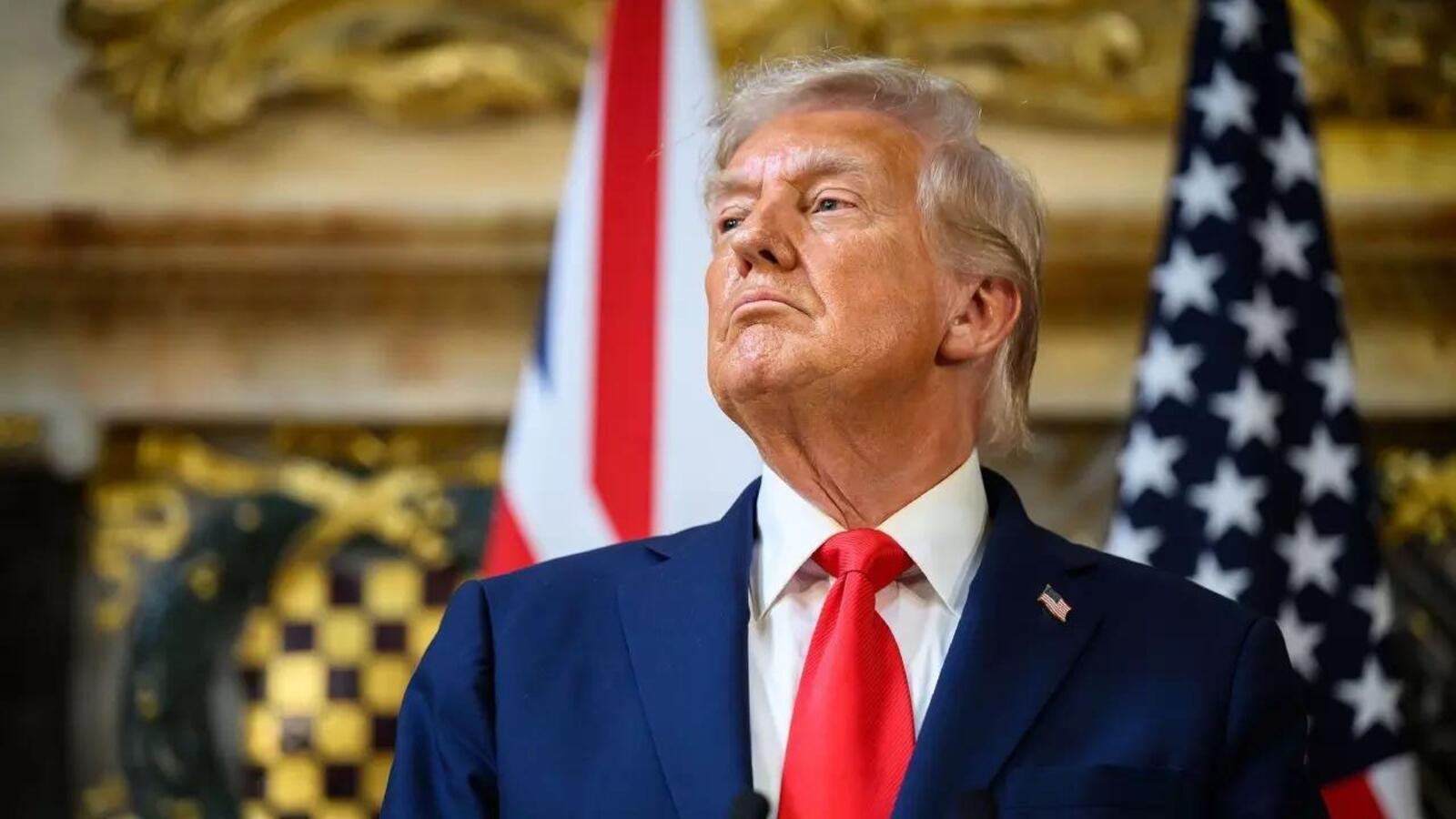
Donald TrumpOver the years, the United States has emerged as a major destination for skilled Indian professionals, particularly those working in the information technology (IT) sector, seeking better career opportunities.According to the Migration Policy Institute, citing US Census data, approximately 3.2 million Indian immigrants lived in the US in 2024, accounting for around 6 per cent of the country's 50.2 million foreign-born population.
This makes Indians the second-largest immigrant group in the country, after Mexicans.The strong presence of Indian professionals in the US skilled workforce is also reflected in the H-1B visa programme, which allows American companies to temporarily employ foreign professionals, including software engineers, IT specialists and scientists, in specialised roles.The recent decision of the US administration to suspend eight technology companies, including TCS, Infosys, Wipro, HCLTech, Cognizant, Capgemini, Microsoft and Adobe, from the Permanent Labor Certification (PERM) programme, has rattled the Indian IT industry professionals who have long reaped the benefits of the H-1B visa programme.Indians accounted for around 70 per cent of all H-1B petition approvals in FY2024, underscoring their significant role in the US skilled-worker ecosystem.Under the suspension, the US government will neither accept new applications nor process pending labour certification applications involving these companies.
PERM is a key step in the process through which employers sponsor foreign workers for permanent residency, commonly known as a green card.As these restrictions create uncertainty for Indian IT professionals already working in the US or aspiring to move there, could they encourage skilled workers to reconsider their career plans and explore opportunities back home in India’s fledgling AI sector?India’s AI ambitions India’s AI ecosystem is witnessing steady growth, supported by government investment and expanding technology infrastructure.
The government has allocated over ₹10,300 crore for the IndiaAI Mission over five years, with 38,000 GPUs deployed to strengthen the country’s AI computing capabilities.Reflecting its long-term growth potential, AI is estimated to contribute as much as $1.7 trillion to India’s economy by 2035.Against this backdrop, Indian technology professionals considering a return from the US could find opportunities in the country's expanding AI industry, whether through employment in emerging startups or by establishing their own ventures.Highlighting the opportunities in India's AI ecosystem, Ajay Goyal, Founder and CEO of Erekrut, said that AI engineers, software developers, data specialists and automation experts will be increasingly in demand.India already has examples of technology professionals who have returned from the US and other countries to contribute to its growing AI ecosystem.
Vivek Raghavan, who earned his PhD from Carnegie Mellon University and spent several years working in the US technology industry, returned to India in 2007.
He subsequently contributed to initiatives such as Aadhaar, Bhashini and AI4Bharat before co-founding Sarvam AI in 2023 to develop AI models tailored to Indian languages.Similarly, Suvrat Bhooshan, a Stanford-educated former Facebook AI Research professional, returned to India in 2020 and founded Gan.ai in 2021.
The startup focuses on AI-powered personalised videos, voice technologies and digital avatars.“India has the talent to become a global AI innovation hub.
More investment in Indian teams can help startups build homegrown AI products, create jobs and serve global markets,” he said.Goyal further emphasised the need for India to move beyond technology services towards developing its own AI products and intellectual property, supported by practical AI education, greater research investment and improved access to technology infrastructure.Talent showFormer OpenAI researcher Shyamal Anadkat announced in June that he had returned to India after spending nearly four years in the San Francisco Bay Area.
In a post on X, he highlighted the potential to build globally significant AI institutions outside Silicon Valley.“After close to four years at OpenAI, I moved from the Bay Area to India earlier this year.
I still believe deeply in ensuring true superintelligence accelerates science and remains accessible and beneficial to all,” he wrote.Since returning, Anadkat has been engaging with researchers, engineers and entrepreneurs across India and the wider Asia-Pacific region.Anadkat is one example of how Indian technology professionals with experience in the US are increasingly recognising opportunities to apply their knowledge and expertise in India's growing AI ecosystem.However, to fully capitalise on this talent and strengthen its position in the global AI race, India still needs to address several gaps in its domestic AI capabilities.Highlighting this challenge, Shaikh Qhaiz Kasim, Chief Operating Officer at EnsoWebworks, said that while AI is advancing globally, including in India, the country continues to rely heavily on technologies developed overseas.“AI is evolving globally, including in India.
However, we are still largely dependent on tools and technologies developed in the US,” Kasim said.He also cautioned that US immigration restrictions alone would not bring about a major transformation in India's AI ecosystem.He identified the gap between academic learning and industry needs, particularly the lack of practical AI skills among graduates, and high infrastructure costs as major challenges to India’s AI growth.While the US continues to lead the global AI race, India has an opportunity to strengthen its position by attracting experienced Indian technology professionals working overseas.
Although Trump's immigration restrictions may not significantly alter America's AI dominance, they could create an opportunity for India to turn its long-standing brain drain into brain gain.However, realising this potential will depend on India's ability to provide the right infrastructure, investment, research opportunities and industry support to attract and retain talent, positioning the country as a stronger contender in the global AI landscape.
ସ୍ପଷ୍ଟୀକରଣ: ଏହି ବିଷୟବସ୍ତୁଟି ସୂଚନାମୂଳକ ଉଦ୍ଦେଶ୍ୟରେ News ରୁ ସ୍ୱୟଂଚାଳିତ ଭାବରେ ସଂଗ୍ରହ କରାଯାଇଛି। ମୂଳ ଲେଖାଟି ପଢ଼ିବା ପାଇଁ, ଦୟାକରି ଏଠାରେ ଦେଖନ୍ତୁ।

Odisha Press & Media
Learn Data Science & Analytics at IAIAC.IN
Learn in-demand data skills with hands-on projects and mentor support.



/sambad/media/media_files/2026/08/24/images-8-2026-08-24-21-58-24.jpg)
/sambad/media/media_files/2026/08/24/ouat-2026-08-24-21-08-28.jpeg)

/sambad/media/media_files/2026/09/06/06bbs_31_06092026_112-2026-09-06-19-37-35.jpg)